
Task 36: Material and Energy valorisation of waste in a Circular Economy
Archive for ‘News’
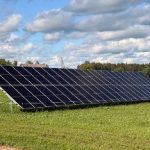
BioSOLfarm Conference, Rietavas, Lithuania 16 – 18 June 2026
Jun 2026The conference was held at the Rietavas Tourism and Business Information Centre as part of the Interreg South Baltic Programme 2021–2027. The conference combined policy discussion with a presentation of the project’s results from across Germany, Lithuania, and Poland. The conference focused mainly on EU Green Deal Policy. The conference also demonstrated the enhancement of […]
read more
Solutions to plastic pollution in the Baltic Sea region
Jun 2026Every year, around 10 million tonnes of plastic waste end up in the oceans. Plastic pollution remains a growing threat to both ecosystems and the economy. Although most waste comes from everyday consumption, significant amounts still make their way into rivers and coastal areas, mainly due to mismanagement. On 21 May 2026, experts, public authorities, […]
read more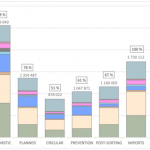
Residual municipal solid waste in a circular economy The Finnish case and what others can learn from it
Jun 2026Reaching EU recycling targets needs more than policy ambition. Sorting systems are a real bottleneck. And the gap is larger than expected. Main take‑aways Meeting EU recycling targets requires very high source separation performance Achieving a 60% MSW recycling rate requires 70–90% separate collection efficiency for most material fractions—far above current levels in many countries. […]
read more
ITALY ADVANCING TOWARDS AN INTEGRATED CIRCULAR ECONOMY AND BIOENERGY SYSTEM
Jun 2026Italy is strengthening its transition towards a circular economy through an integrated policy framework combining national strategies and large-scale investments. The approach connects waste management, sustainability and bioenergy systems, aiming to translate strong policy alignment into effective implementation and measurable results. Italy’s circular economy framework Italy’s transition towards a circular economy is supported by a […]
read more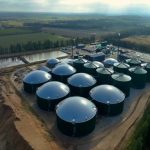
RECENT TASK 36 PUBLICATIONS II
Jun 2026Implementation Examples for Organic Waste Valorization Technologies – Task 36 report This brochure profiles a set of commercial or near-commercial organic waste valorization technologies through concise use cases drawn from operating projects in Europe, North America, and Asia. Technologies covered include AD with carbon capture and utilization/storage (CCU/CCS), hydrothermal carbonization (HTC), hydrothermal liquefaction (HTL), pyrolysis […]
read more
RECENT TASK 36 PUBLICATION I
Jun 2026Smart Sorting technologies for food waste – Task 36 reports For this triennium, Task 36 has identified food waste and its management—including the use of smart and advanced technologies, as well as policy perspectives—as a key focus area. As a result, two reports on the use of advanced sorting technologies for food waste have been recently published. Both reports highlight that advanced and […]
read more
Learn about the newly started projects
Jun 2026Task 36 is in full swing, with seven of the nine projects included in the current triennium programme now actively underway. The year began with the kick-off of the collaborative project “Decentralized Energy Systems – A Part of the Global Energy Transition.” This initiative will present four implemented, well-functioning, and innovative decentralized energy systems that support the transition towards a […]
read more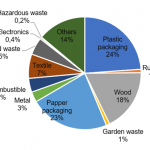
ONE THIRD OF THE SWEDISH COMMERCIAL & INDUSTRIAL WASTE SENT FOR INCINERATION COULD BE RECYCLED
Dec 2025Historically, data on the composition of commercial and industrial waste (CIW) has been scarce. This is largely because the waste stream originates from a wide range of actors and varies significantly in quantity, composition, and size—from small fractions to bulky items. To obtain a reliable overview of this fraction, a large number of sorting analyses […]
read more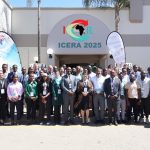
IEA Bioenergy Task 36 at ICERA 2025 – International Conference on Circular Economy, Renewable Energies and Green Hydrogen in Africa
Dec 2025Even though Africa is blessed with resources, access to electricity and modern energy fuels is still a big concern. ICERA brings various stakeholders yearly together to address the issues and help to find solutions through international networks. IEA Bioenergy Task 36 Germany NTL in his activities has hosted ”ICERA 2025 – The third International Conference […]
read more